By Windows Republic
Double glazing uses two glass panes separated by an insulating gas-filled gap to reduce heat transfer, cut noise, and lower energy bills. It suits both new builds and retrofits, and typically increases property value — making it one of the most cost-effective home upgrades for Australian homeowners.
Double glazing is gaining popularity across Australia. From energy efficiency to noise reduction, it's a smart upgrade for homeowners looking to improve comfort, cut running costs, and boost property value. This guide covers everything you need to know — from how it works to installation, maintenance, and costs.
Double glazing consists of two panes of glass separated by a sealed gap, typically filled with argon gas. This configuration significantly reduces heat transfer — less heat escapes in winter, and less enters in summer — keeping homes comfortable year-round.
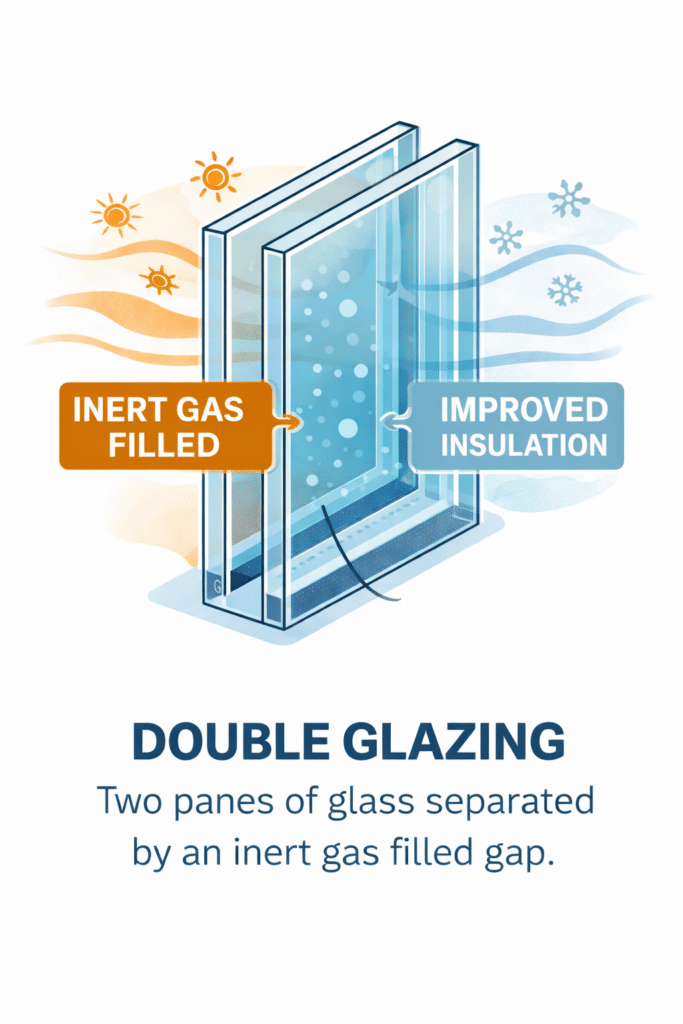
The sealed gap between the panes acts as a thermal and acoustic barrier. Key components include:
Double glazing works equally well in new builds and retrofitted into existing frames, making it one of the most flexible window upgrades available in Australia.

The insulating gap in a double glazed unit acts as a thermal buffer. In Melbourne's Climate Zone 6 — a heating-dominated climate — the main performance gain is keeping warmth inside during winter. In summer, the same barrier slows heat entry from outside.
Argon gas (denser than air) further slows heat conduction between panes. Combined with a well-sealing uPVC or thermally broken aluminium frame, the result is a window with a significantly lower U-value than single glazing — meaning much less energy wasted through the glass.
Investing in energy-efficient glazing also reduces your home's carbon footprint, supporting Australia's shift toward sustainable housing under the NCC 2025 energy standards.
For homes near busy roads, tram lines, or flight paths, acoustic performance is often the primary reason to upgrade. Double glazing reduces noise transmission through a combination of the air gap, glass mass, and optional laminated glass layers.


See our full uPVC vs aluminium comparison for a detailed breakdown by performance, maintenance, and cost.
Double glazing costs vary significantly depending on window size, frame material, glass specification, access conditions, and whether you are replacing existing windows or installing into a new build. See our double glazing cost guide for current Melbourne pricing.
Double glazing delivers measurable improvements to energy efficiency, acoustic comfort, condensation control, and security — all of which translate to lower running costs and a more comfortable home. For Melbourne homeowners, the long-term energy savings make it one of the highest-return home upgrades available.
Whether you're building new or retrofitting an existing home, double glazing delivers long-term improvements to comfort, energy performance, and property value that compound over the life of the window.
Double glazing consists of two panes of glass separated by a sealed gap — typically 12–16mm — filled with argon gas or dry air. This gap acts as a thermal and acoustic barrier, slowing the movement of heat between inside and outside.
In winter, heat stays inside; in summer, solar heat entry is reduced. The result is a more stable indoor temperature and lower energy use for heating and cooling.
Cost depends on window size, frame material (uPVC vs aluminium), glass specification (standard, acoustic, or Low-E), number of windows, and site access conditions. There is no single per-window price that applies universally.
Our Melbourne double glazing cost guide covers typical price ranges and the variables that affect your quote.
Yes. Standard double glazing reduces noise transmission by approximately 25–32dB compared to single glazing. For reference, a 10dB reduction is perceived as roughly halving the loudness of a sound.
For maximum acoustic performance — near tram lines, busy roads, or flight paths — we recommend asymmetric glass panes (e.g. 6mm + 4mm) and an acoustic laminated interlayer, which can push attenuation significantly higher.
Yes, for most Australian homeowners — particularly in Melbourne and other southern cities. Heating and cooling accounts for around 40% of household energy use in Australia, and a significant portion of that energy is lost through windows.
Double glazing reduces that loss, lowers running costs, improves comfort, reduces condensation and mould risk, and adds measurable value at resale. The long-term return on investment is well-established.
Yes. The most effective approach is full frame replacement — removing the existing single-glazed window entirely and installing a new double-glazed unit in the opening. This delivers full thermal and acoustic performance.
Secondary glazing (a second panel fitted to the interior of an existing frame) is a lower-cost alternative where full replacement isn't practical — for example, in rental properties or heritage-listed homes. See our guide to retrofitting double glazing for a full comparison.
Double glazing eliminates condensation on the inner glass surface. This happens because the interior pane stays much closer to room temperature — warm air inside can no longer reach its dew point on the glass, so moisture doesn't form.
Condensation on the outer pane (the surface facing outside) is normal and actually indicates the window is performing well — the inner pane is retaining heat so effectively that the outer pane remains cold enough for external moisture to form on it.
uPVC frames use multi-chamber profiles that inherently block thermal bridging, delivering better whole-window U-values. They don't corrode, rot, or warp — ideal for coastal Melbourne suburbs like Brighton, St Kilda, and Port Melbourne. They require minimal maintenance and typically offer the best long-term energy performance.
Thermally broken aluminium frames suit larger spans and commercial applications where slim sightlines are a design priority. They require a thermally broken section to perform comparably to uPVC. In coastal or salt-air environments, aluminium requires more maintenance to prevent corrosion. See our uPVC vs aluminium comparison for full details.
Hold a lit candle or a pen torch close to the glass at night and look at the reflection. Single glazing shows one reflection; double glazing shows two reflections (one from each pane), slightly offset. You can also look at the edge of the glass from the side — a double glazed unit will have a visible spacer bar between the two panes, often silver or black.
If you're in an older Melbourne home (pre-2000s), your windows are almost certainly single glazed — double glazing only became mainstream in Australia in the 2010s.
Yes — the insulating gap slows heat conduction from hot outside air into your home. For maximum summer performance, combine double glazing with a Low-E coating, which reflects radiant solar heat before it passes through the glass. External shading (awnings, blinds) also works synergistically with double glazing.
In Melbourne's mixed climate, the same window that keeps warmth in during winter also helps keep heat out in summer — you get year-round benefit from a single upgrade.
Not completely soundproof, but significantly quieter. Standard double glazing reduces noise by 25–32dB. True soundproofing (complete sound elimination) requires much more specialist construction — double glazing is acoustic attenuation, not a sound barrier.
For homes near major roads or flight paths, specifying acoustic laminated glass (with a PVB or EVA interlayer) and ensuring airtight frame seals will maximise the noise reduction achievable from a window upgrade.
Get a free measure and quote — we'll assess your home and provide a transparent, itemised price.
Request Free QuoteNo obligation · Melbourne-wide
