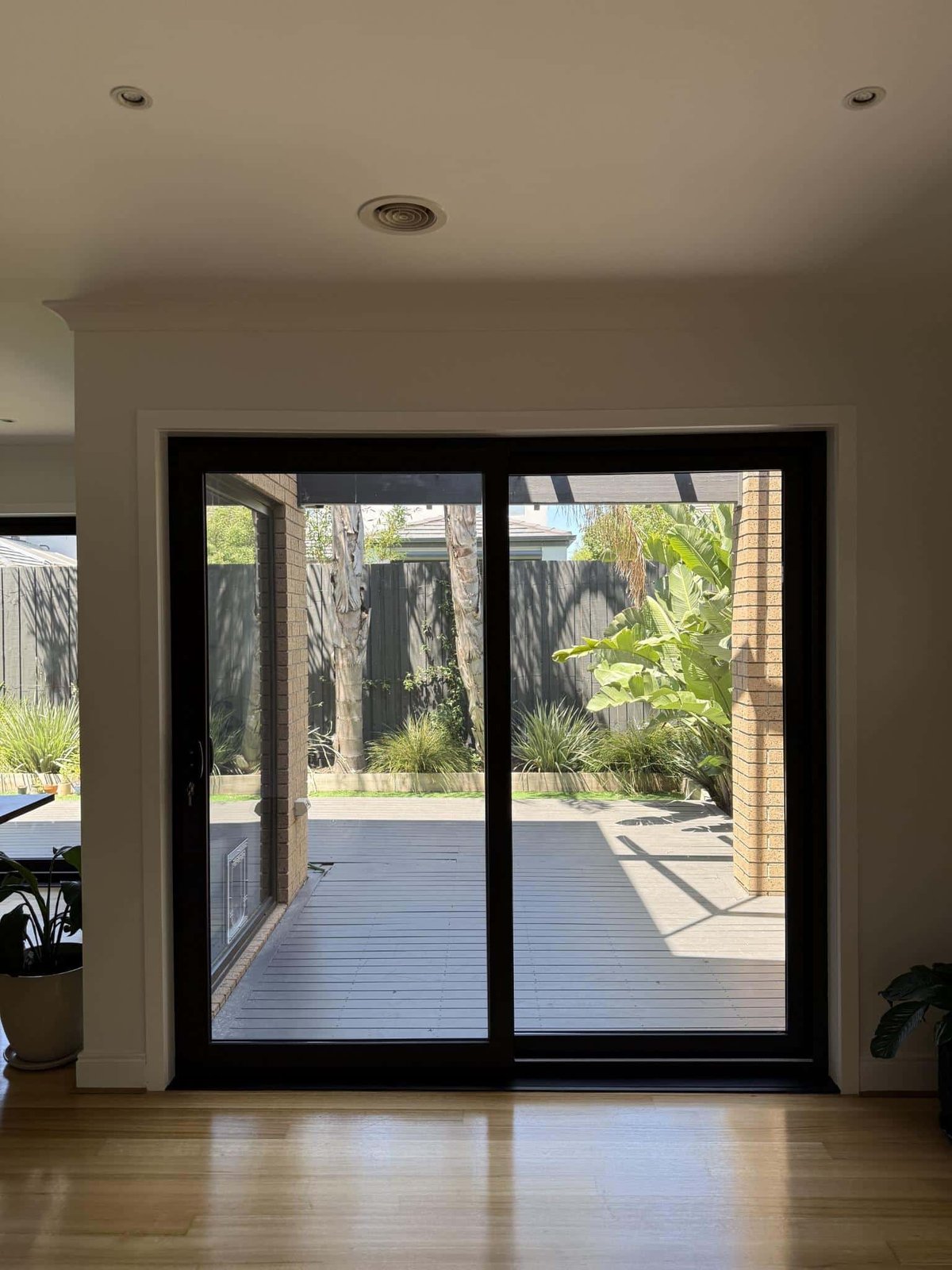
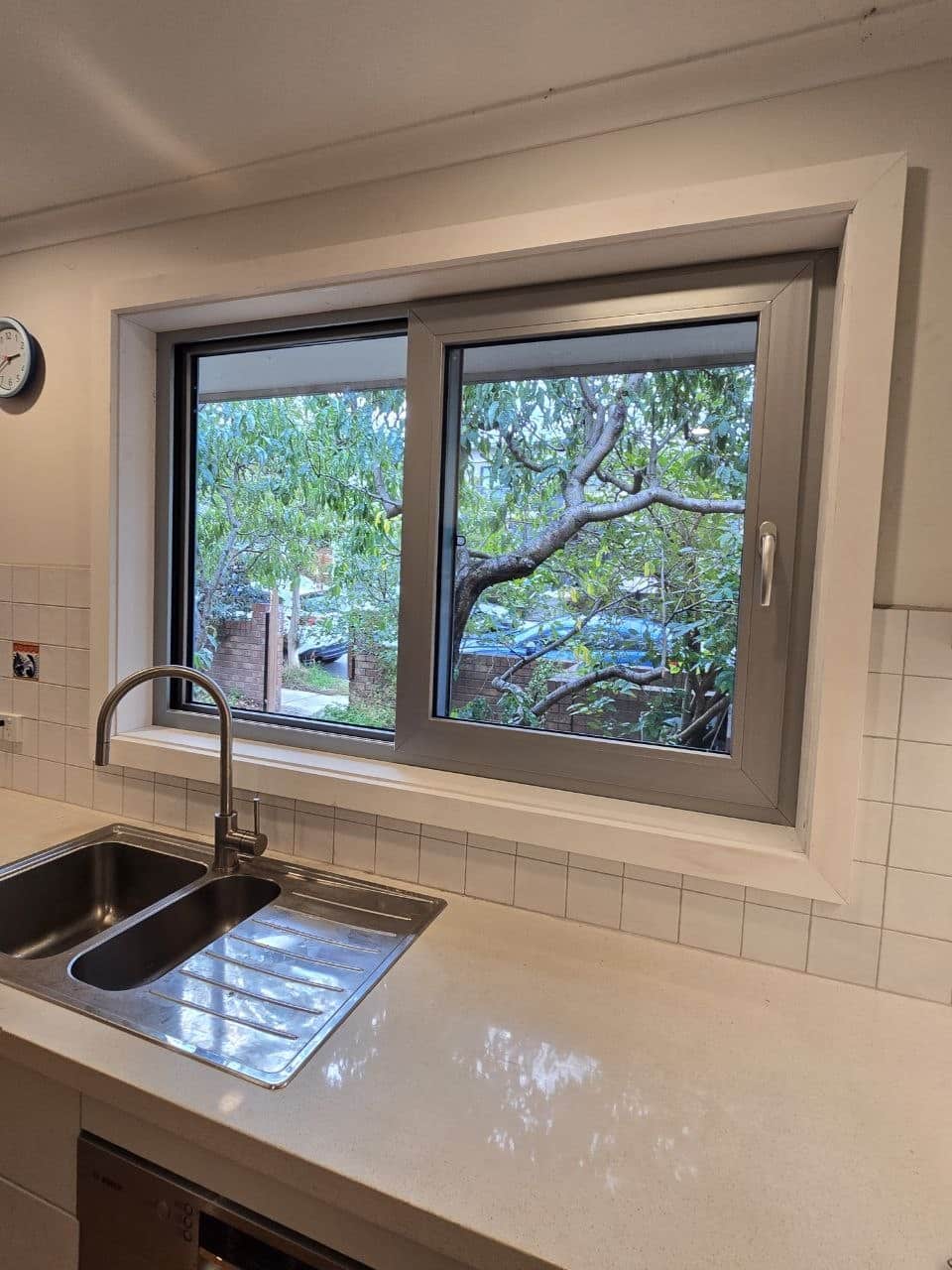
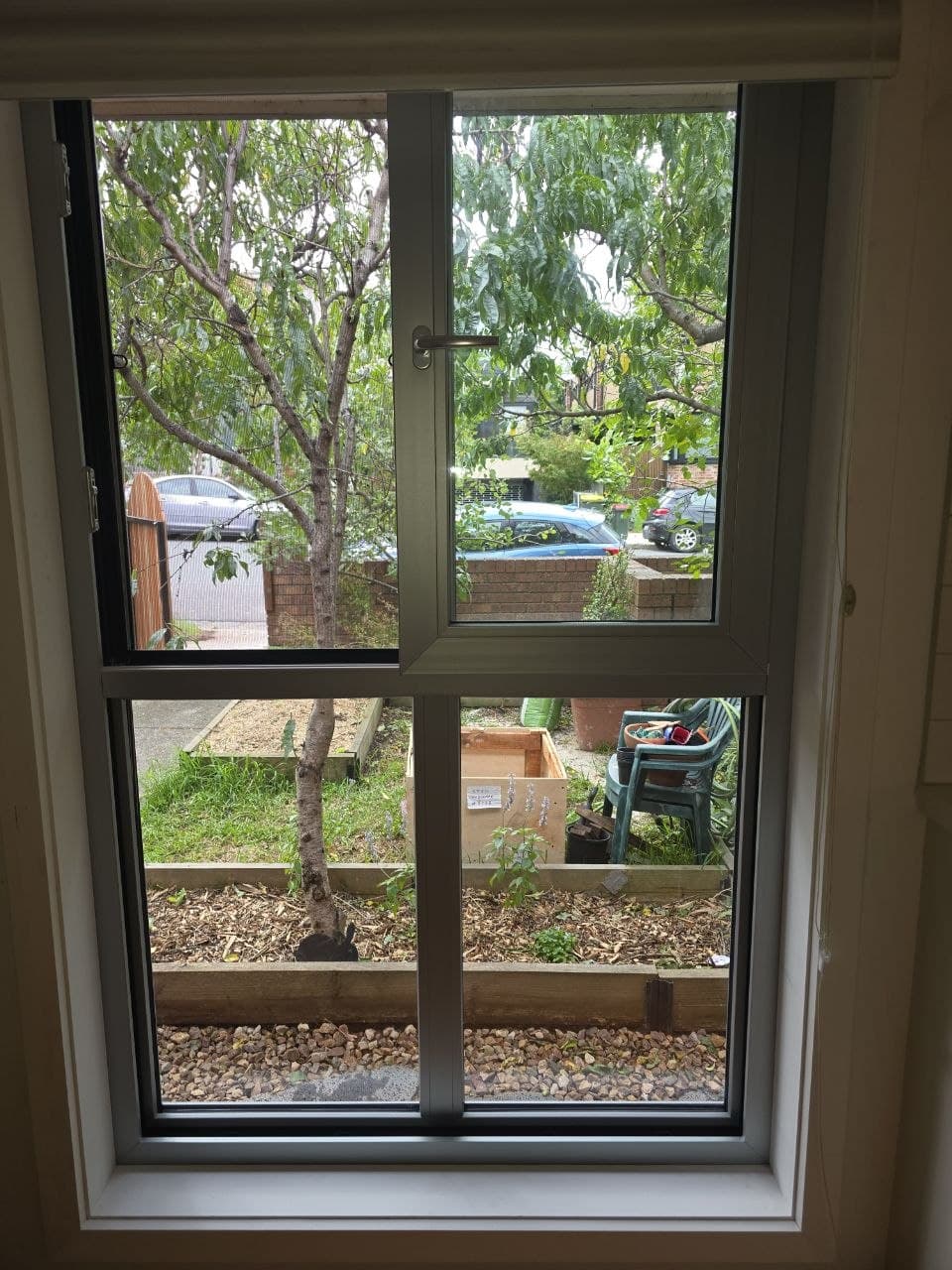
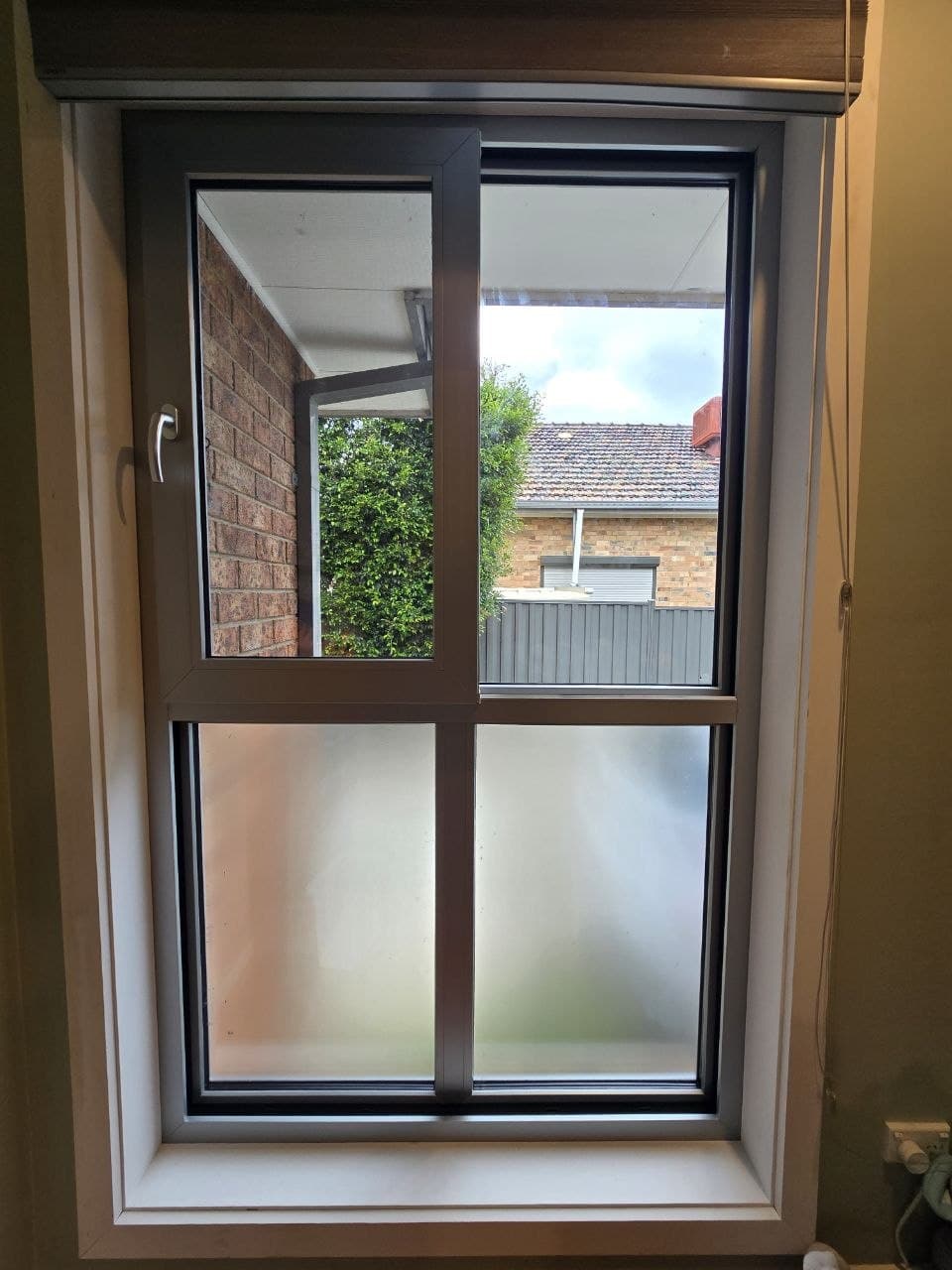
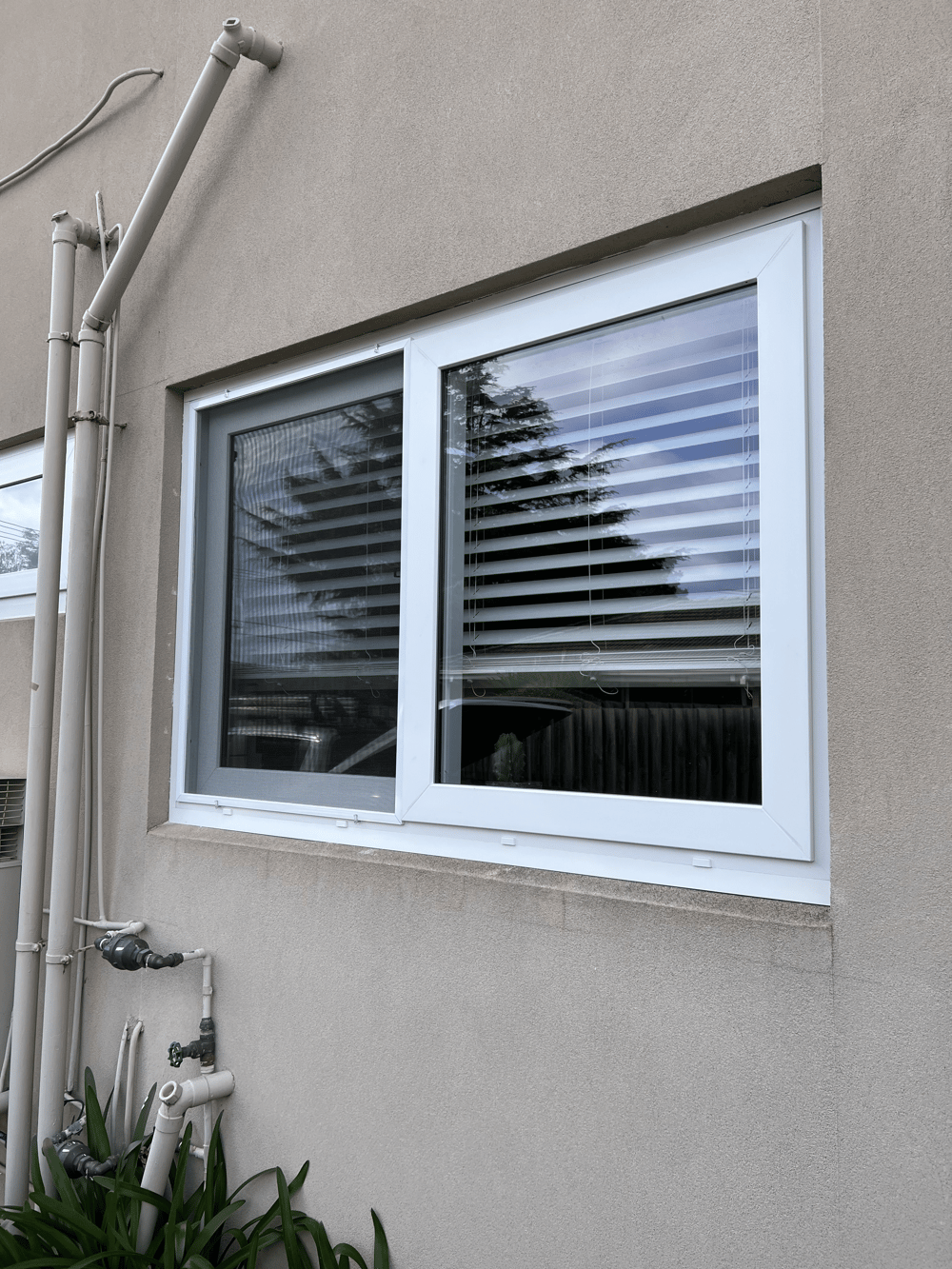
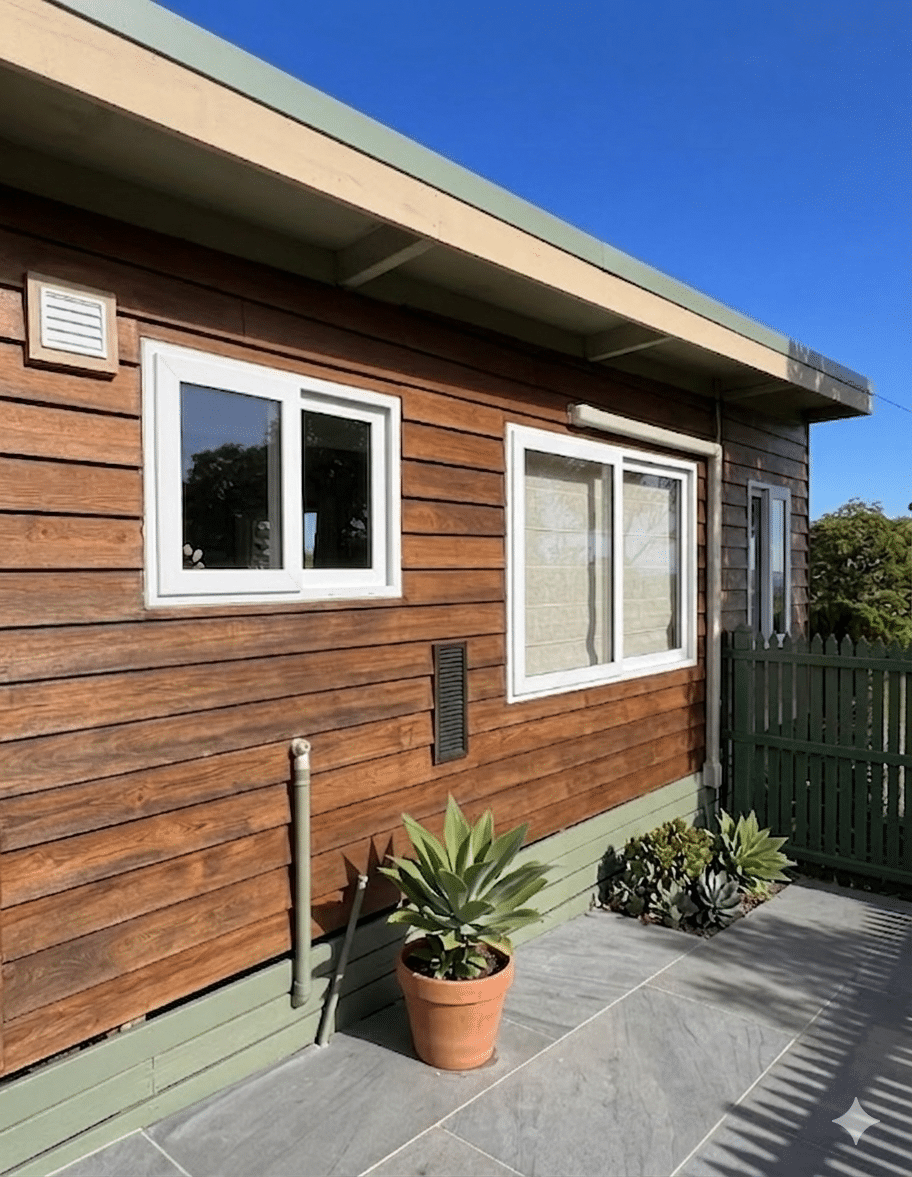
uPVC double glazed sliding windows in Melbourne — horizontal-sliding (“windows that slide”) manufactured at our Cheltenham factory. Smooth single-hand operation, up to 34 dB noise reduction, and dramatically lower energy bills — without the thermal bridging, condensation, or track wear of older aluminium sliding windows. Every Windows Republic sliding window is built to AS 2047, AS 1288, and NCC 2025 standards, backed by our 10-year warranty.
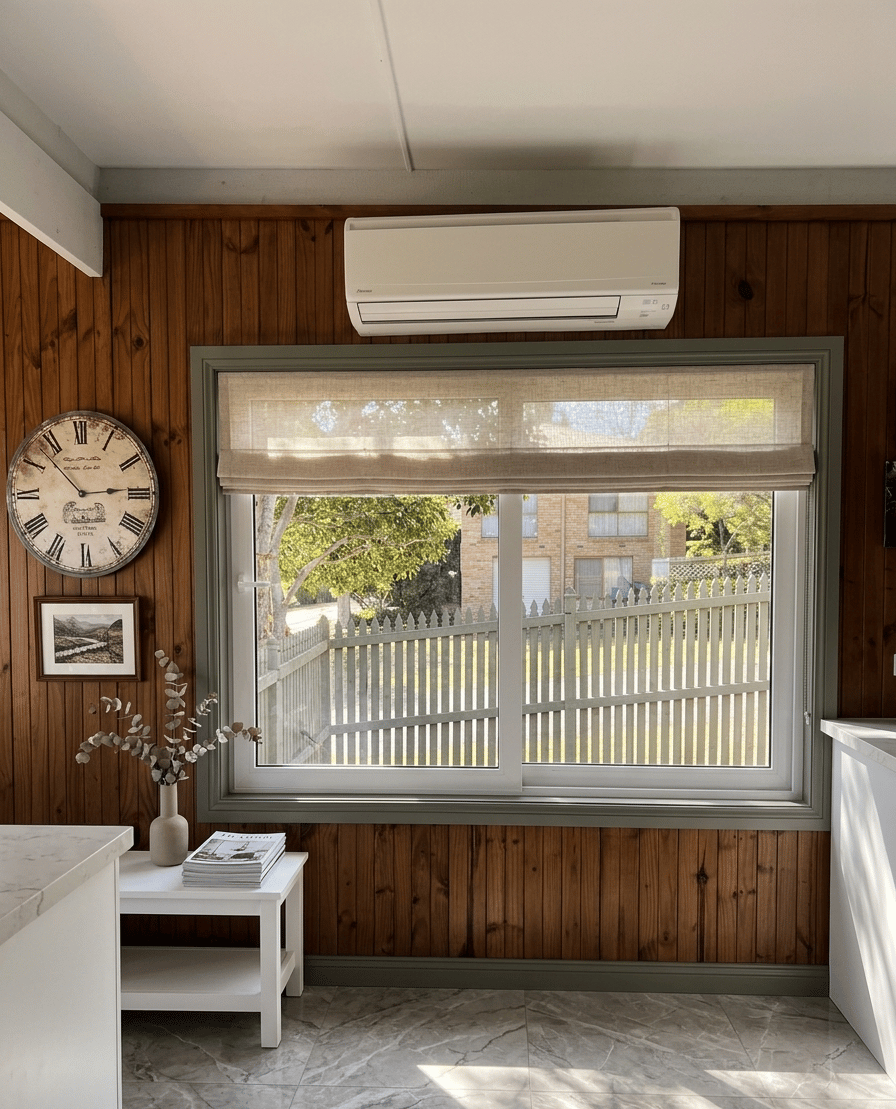
Sliding windows in Melbourne are one of the most common window configurations in the city — found in everything from 1970s aluminium sliding windows in original-condition homes to brand-new uPVC double glazed sliding windows in modern builds. Windows Republic's uPVC sliding windows combine the practicality of horizontal sliding with thermal performance unmatched by aluminium alternatives.
Sliding windows — also called horizontal sliding windows, slider windows, or simply “windows that slide” — operate on a horizontal track. One or more sashes glide sideways past a fixed pane (a sliding glass window), creating an opening for ventilation without swinging inward or outward. Precision rollers sit in a stainless-steel track, allowing the sash to move with minimal friction and one-hand operation.
This horizontal action makes sliding windows the preferred choice where space is limited — a sliding kitchen window above the sink, a laundry window opening onto a walkway, or a bedroom slider where curtains hang close to the glass. Unlike casement or awning windows, a slider requires zero clearance outside the wall — nothing protrudes into a walkway, patio, or garden bed.
Modern uPVC sliding windows are a significant step up from the aluminium sliders in most Melbourne homes built between the 1970s and 2000s. Those older frames conduct heat directly through the metal, rattle in the wind, and offer almost no acoustic insulation. A uPVC slider with double glazing eliminates all three problems — and makes sliding window replacement a one-for-one swap with no structural rework.
Every configuration is custom-sized to your exact measurements. Manufactured at our Cheltenham factory.
One fixed pane, one sliding sash. The most common configuration — ideal for bedrooms, kitchens, and standard openings.
Three tracks — master slides first, interlocks middle, both travel together. Step-like stack opens two-thirds of the frame.
Four panels — fixed panes on each side, two centre sashes slide apart. Symmetrical opening, maximum ventilation.
If you're comparing uPVC sliding windows with aluminium sliding windows for your Melbourne home, the difference comes down to thermal performance, condensation, and longevity. Aluminium conducts heat at ~200 W/m·K vs uPVC at 0.17 W/m·K — over a thousand-fold difference that shows up in your energy bills, your indoor comfort, and how often the window seals fail.
| Feature | uPVC (Windows Republic) | Aluminium |
|---|---|---|
| Thermal insulation | U-value from 1.8 W/m²K | U-value 4.5–6.0 W/m²K (standard) · 2.5–4.0 W/m²K (thermally broken) |
| Condensation | Warm frame — minimal | Cold frame — frequent |
| Noise reduction | Up to 34 dB (STC 32+) | 25–28 dB typical |
| Maintenance | Wipe clean — no painting | Oxidises, needs recoating |
| Colour stability | UV-stabilised white · Renolit FX laminated colours | Powder coat fades, chips and flakes over time |
| Roller longevity | Rigid frame — rollers last 15–20+ years | Frame flex and rail corrosion reduce roller life |
| Australian Made | Cheltenham, VIC | Often imported |



Double glazed sliding windows in Melbourne need to handle 38°C summer afternoons and 4°C winter mornings — sometimes in the same week. Our uPVC double glazed sliding windows are engineered for that range, achieving system U-values from 1.8 W/m²K — significantly better than thermally-broken aluminium sliding windows, which typically sit at 2.5–4.0 W/m²K.
Every sliding window from our Cheltenham factory is double glazed as standard. Two panes of glass separated by a 12–16 mm argon-filled cavity, sealed with a warm-edge spacer bar and low-E coating.
Argon gas and low-E coating reduce heat transfer by up to 70% vs single glazing. Melbourne’s wild temperature swings — from frost at dawn to 35°C by lunch — are exactly the conditions where double glazing earns its keep.
Up to 34 dB reduction as standard, or 40 dB+ with acoustic laminated glass. If you live near a tram line in Brunswick, a flight path in Essendon, or a busy arterial in Glen Waverley — that’s the difference between hearing every truck brake and sleeping through the night.
The warm-edge spacer and uPVC frame keep the interior glass above dew point, virtually eliminating condensation and mould in normal conditions. Cold aluminium frames act as thermal bridges, pulling heat out and attracting moisture — uPVC breaks that cycle.
No single “best” window — the right choice depends on the room. Many Melbourne homes use a mix.
| Feature | Sliding | Casement | Awning | Tilt & Turn |
|---|---|---|---|---|
| Operation | Horizontal glide | Side-hinged swing | Top-hinged, tilts out | Tilt in or swing in |
| Space required | None | Clearance outside | Clearance outside | Clearance inside |
| Max ventilation | Up to 50% | Up to 100% | ~30% | Up to 100% |
| Flyscreen | Fixed — always in place | Retractable needed | Retractable needed | Fixed — always in place |
| Best rooms | Kitchen, laundry, bedroom | Living, feature | Bathroom, high openings | Living, bedrooms |
Every sliding window is built at our Cheltenham factory, 20 km south-east of Melbourne’s CBD — not imported, not rebranded.
Windows are typically the weakest thermal link in any home. Understanding the standards ensures a compliant, future-proof investment.
Older aluminium sliders could be lifted off their tracks. Our uPVC sliding windows eliminate those vulnerabilities.
Sash locks at multiple points along its height.
All sliding windows accept retractable fly screens for insect-free ventilation.
Integrated into frame to prevent sash removal.
Glass fitted from inside — not removable from exterior.
Holds together when broken, preventing entry.
All windows accept aftermarket screens and grilles.
Windows Republic installs uPVC sliding windows in Melbourne from our Cheltenham factory. Our installation teams work daily across Melbourne's inner, eastern, southeastern, and bayside suburbs.
If your suburb isn't listed, we likely still service it — contact us for a free measure-and-quote.
Below is current 2026 pricing for uPVC double glazed sliding windows in Melbourne, fully installed by Windows Republic. All figures include local manufacturing, on-site measure, professional installation, and our 10-year warranty. No subcontractors, no hidden costs — and a fair upgrade path from old aluminium sliding windows.
All prices for uPVC double glazed sliding windows, fully installed — including removal, fitting, sealing, reveals, and clean-up.
| Window Type | Installed Price | Notes |
|---|---|---|
| Two-panel slider (standard) | $2,800 – $3,500 | Most common — bedrooms, kitchens |
| Three-panel slider | $3,400 – $4,400 | Wider openings, living areas |
| Double slider (both operable) | $3,100 – $4,000 | Maximum ventilation |
| Acoustic upgrade (laminated) | + $200 – $400 | Recommended near busy roads |
Prices from our Melbourne Pricing Guide 2026. Every quote is fixed-price — no surprises.
We provide free on-site measure and quotes for uPVC sliding windows in Melbourne within 48 hours of your enquiry — including suburb-specific recommendations for Brighton, Hawthorn, Carnegie, South Yarra, Toorak and surrounding areas. Whether you're replacing failing aluminium sliding windows or specifying new sliding windows for a Melbourne renovation, we'll give you a fixed-price quote with no surprises.
Recent sliding window installations across Melbourne — Thornbury, Beaumaris, Rosebud and more.
uPVC sliding windows need minimal maintenance — no painting, no oiling hinges. A few minutes each season keeps them perfect for decades.
Clean tracks — Vacuum debris, wipe with damp cloth. Built-up grit is the #1 cause of stiff sliding.
Wipe frames — Soft cloth, warm soapy water. Never use abrasive cleaners or solvents.
Lubricate rollers — Light silicone spray. Avoid oil-based lubricants — they attract dust.
Check weatherseals — Inspect weatherpile strips for compression or wear.
Most Melbourne homeowners come to us because their existing aluminium sliding windows are failing. Here are the five most common issues we see — and why a uPVC sliding window upgrade fixes each one for the long term.
The issue: Aluminium tracks develop wear grooves from roller contact after 10–15 years. Combined with corrosion in coastal Melbourne, this turns smooth sliding into stuck or grinding operation.
How uPVC solves it: Multi-chamber uPVC frames are dimensionally stable. Our sliding windows use precision stainless-steel tracks paired with German-engineered rollers — designed for 50+ years of smooth operation.
The issue: Old aluminium sliders rely on weatherpile (brush) seals that compress and degrade over time. Once flat, cold air pours in even when the window is "closed".
How uPVC solves it: Our uPVC sliders use double weatherpile plus a central interlock, tested to AS 2047 for air infiltration. Air leakage rates are significantly lower than equivalent older aluminium sliders, with seals that maintain compression for 25+ years.
The issue: Aluminium conducts heat at ~200 W/m·K — more than 1,000 times higher than uPVC (0.17 W/m·K). The cold inside surface of aluminium frames pulls moisture out of warm indoor air, soaking sills and growing mould.
How uPVC solves it: uPVC frames stay near room temperature on the inside, even in Melbourne's coldest July mornings. Condensation is minimal to zero on a properly installed uPVC sliding system.
The issue: Aluminium is a hard, resonant metal that transmits sound vibration into the room. Standard single-glazed aluminium sliders typically deliver 25–28 dB of noise reduction — only marginally better than the noise floor of an open suburban street.
How uPVC solves it: Our uPVC sliding windows with double glazing deliver up to 34 dB STC. Combined with acoustic laminated glass (10.38mm), Melbourne homeowners near tram lines and arterial roads see noise reduction up to 40 dB.
The issue: Aluminium slider locks are typically single-point latches that wear, jam, or can be defeated easily. Older sashes can also be lifted out of their tracks from the outside — a known security weakness.
How uPVC solves it: Every Windows Republic sliding window uses multi-point locking with anti-lift tabs that prevent sash removal. Optional keyed locks available for added security.
Casement, awning, fixed, and more
Learn more →uPVC double glazed sliding & lift-and-slide
Learn more →Dual-mode European windows
Learn more →Specialist acoustic glazing
Learn more →Maximum thermal & acoustic performance
Learn more →Heritage style, modern performance
Learn more →Hundreds of Melbourne homeowners have upgraded to Windows Republic uPVC sliding windows — from heritage cottages in Carnegie still on their original aluminium sliding windows, to modern Brighton homes specifying double glazed sliding windows for new builds. Locally manufactured in Cheltenham, locally installed across Melbourne, with a 10-year warranty on every project.
Free measure and quote — no obligation. Call or request online.
Visit our showroom in Cheltenham to see and operate our sliding windows in person. Compare profiles, glass options, colours, and hardware. Open Monday to Friday 9 am–5 pm, Saturday and Sunday by appointment.
Get directions → · 14B Viking Court, Cheltenham VIC 3192 · 1300 040 480


We'll respond via email within 24 hours
We'll be in touch within 24 hours.
This window will close automatically